



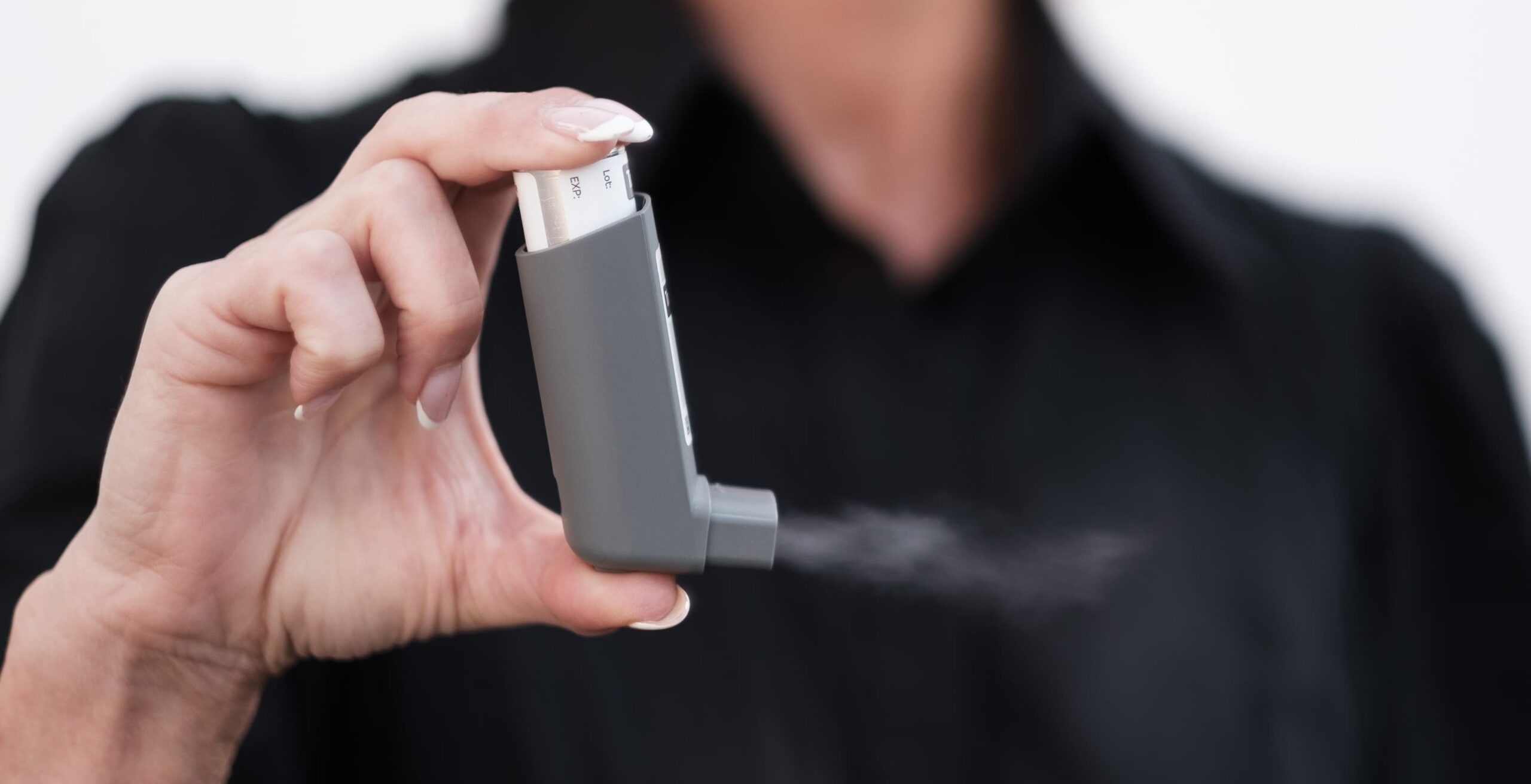
The short answer: Use your inhaler exactly as prescribed and shown by your pharmacist, GP or asthma nurse. Clean it at least once a week, using the method in your own patient information leaflet, because the correct way depends on the type of inhaler. For many pressurised “puffer” inhalers, you wash only the plastic case in warm water and never get the metal canister wet. Some inhalers must not be washed at all.
Using an inhaler well is a skill, and looking after it matters too. A blocked or dirty inhaler may not deliver your medicine as it should, and that is the last thing you want in the middle of asthma symptoms. This guide covers the basics, with clear steps and some common mix-ups to avoid.
Your leaflet comes first. Instructions differ between brands and device types. If anything below differs from the patient information leaflet in your pack, follow the leaflet. If you’ve lost it, your pharmacist can help, and you can also find leaflets on the emc website (medicines.org.uk).
Why does looking after your inhaler matter?
Inhalers don’t clean themselves. Medicine can build up around the mouthpiece and spray opening, sometimes without being easy to see, and this can stop the inhaler working properly. Dust and debris can also collect if the cap is left off, and you could breathe them in the next time you use it.
For a reliever inhaler, you need it to work every time. For a preventer, you rely on it working every day. Either way, a few minutes of weekly care is worth it.
What type of inhaler do you have?
The way you use and clean your inhaler depends on its type.
| Type | What it looks like | Cleaning in brief |
|---|---|---|
| Pressurised metered-dose inhaler (pMDI) | A plastic case with a small metal canister you press down | Usually: remove the canister, rinse the plastic case only, dry fully, replace. Some must not be washed, so check your leaflet. |
| Breath-actuated inhaler | Similar to a pMDI, but it releases the dose when you breathe in | Plastic parts are rinsed. The canister stays dry. The case needs time to dry fully, often overnight. |
| Dry powder inhaler (DPI) | Releases a powder dose when you breathe in | Never use water. Wipe the mouthpiece with a clean, dry cloth. |
How to use a pressurised metered-dose inhaler (pMDI)
Your healthcare professional should show you how to use your inhaler and check your technique now and then. Asthma + Lung UK also has short videos for most devices. The usual steps are:
- Remove the cap and check the mouthpiece is clean and empty.
- Check the dose counter (if there is one) and the expiry date.
- Shake the inhaler if your leaflet says to.
- Breathe out gently, then seal your lips around the mouthpiece.
- Start breathing in slowly and steadily, press the canister once, and keep breathing in.
- Hold your breath for about 10 seconds, or for as long as is comfortable.
- If you need another puff, wait a short while (your leaflet or healthcare professional will say how long), then repeat from step 3.
- Replace the cap.
- If it’s a steroid preventer inhaler, rinse your mouth with water and spit it out afterwards. This helps clear medicine from your mouth and throat and reduces side effects such as a sore mouth or thrush.
Using a spacer
A spacer is a plastic chamber that attaches to your pMDI. NHS and respiratory guidance recommends using one with a pMDI whenever possible, because more medicine reaches the lungs. It can also make the inhaler easier to use if timing your breath with the press is difficult. Spacers are not used with dry powder inhalers. Your spacer has its own cleaning instructions, so check its leaflet or ask your pharmacist.
Priming, dose counters and empty inhalers
- Priming: Some inhalers need to be primed (test-sprayed into the air, away from your face) when new or if they haven’t been used for a while. The number of puffs and the timing differ between inhalers, so follow your leaflet.
- Dose counters: Some inhalers have one. Check it regularly so you know when to order a replacement.
- Empty inhalers: A pMDI can still puff when it’s empty, but you may be getting air rather than medicine. If there’s no counter, keep track of your doses and check the leaflet for how many your inhaler contains.
How to clean your inhaler
Clean your inhaler at least once a week. A weekly phone reminder can help.
If your inhaler can be washed (many reliever pMDIs, such as salbutamol/Ventolin-type inhalers)
Never let the metal canister get wet. Only the plastic case is washed.
- Pull the metal canister out of the plastic case and take off the mouthpiece cap.
- Rinse the plastic case under warm running water for about 30 seconds.
- Dry the case thoroughly, inside and outside, before putting the canister back.
- Push the canister back in. Point the inhaler away from you and release a single puff into the air to test it.
- Put the cap back on. It should click into place.
If your inhaler must not be washed (for example, Clenil Modulite)
Some inhalers, including Clenil Modulite (a steroid preventer), must not be washed or put in water. For these:
- Do not remove the canister from the plastic case.
- Do not use water or any other liquid.
- Remove the mouthpiece cap and wipe the mouthpiece and the small spray opening with a clean, dry cotton bud or tissue, as your leaflet describes.
- Put the cap back on.
If you have a dry powder inhaler
Wipe the mouthpiece, inside and outside, with a clean, dry cloth. Never use water, because damp powder can stop the inhaler working.
How should I store my inhaler?
- Keep the cap on whenever you’re not using it, so dust and debris stay out.
- Store it somewhere dry and at room temperature.
- Try not to leave it in a steamy bathroom, in direct sunlight (such as a sunny windowsill) or somewhere very cold.
- Keep it safely out of reach of children and pets.
- Check the expiry date and replace the inhaler if it has passed. Take empty or out-of-date inhalers back to your pharmacy for safe disposal.
When to get help
Call 999 if you’re having an asthma attack: your reliever isn’t helping or doesn’t last four hours, your symptoms are getting worse, or you’re worried at any point. The NHS advice for most people with a blue reliever is to sit up straight (not lying down), stay as calm as you can, and take one puff every 30 to 60 seconds, up to 10 puffs, ideally through a spacer. Call 999 if you feel worse at any point or don’t feel better after 10 puffs, and follow the call handler’s advice. If you have a MART or AIR inhaler, or your personal asthma action plan says something different, follow your plan. If you don’t have your reliever with you, call 999 straight away.
Get an urgent same-day appointment with your GP or asthma nurse if you’ve had an asthma attack, even if you recovered with your inhaler.
Speak to your GP, asthma nurse or pharmacist if:
- your symptoms are getting worse, or you’re using your reliever more often than usual
- you’re not sure your technique is right, or you find the inhaler hard to use
- your inhaler seems blocked or isn’t spraying as expected after cleaning
- you’re running low and need a new prescription
Don’t stop or change your prescribed inhalers without speaking to a healthcare professional. If you can’t get a repeat supply, contact your prescriber or pharmacist for advice.
Frequently asked questions
How often should I clean my inhaler?
At least once a week, whether it’s a reliever or a preventer.
Can I wash my inhaler in water?
It depends on the type. Many pMDI cases can be rinsed (never the metal canister), but some inhalers, including Clenil Modulite, must not be washed, and dry powder inhalers must never get wet. Check your leaflet.
Is it a problem if I never see any dirt?
Medicine build-up can be hard to see. Cleaning on a schedule is better than waiting to spot a problem.
Why does my inhaler need to dry completely?
Moisture can affect how some inhalers work, and the canister of a pMDI should never be put back wet or sit in water.
Does it matter if I use a spacer?
Yes, for pMDIs it’s usually recommended, as it helps more medicine reach your lungs. Ask your pharmacist or asthma nurse whether one is right for you.
Who can check my technique?
Your pharmacist, GP or asthma nurse. Asking is routine and welcome.
Sources
- Asthma + Lung UK, “Maintaining and looking after your inhaler”
- emc SmPC, Clenil Modulite 100 micrograms
- emc PIL: Clenil Modulite
- emc PIL: Ventolin Evohaler
- NHS, “Asthma attack”
- Asthma + Lung UK, “Asthma attacks”
- Asthma + Lung UK, “Rinsing mouth after steroid inhalers and holding breath about 10 seconds”


