
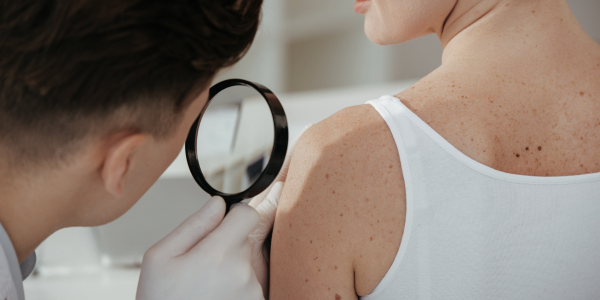
Key Takeaways
- Skin cancer is the most common cancer in the UK and the vast majority of cases are preventable. Over 9 in 10 melanoma cases are linked to UV exposure from the sun or sunbeds. Knowing the three main types (BCC, SCC, and melanoma) and using the ABCDE rule to check your moles monthly gives you the best chance of catching anything early, when treatment is most effective.
- Risk is shaped by both genetics and lifestyle, and some groups need to be especially vigilant. Fair skin, a high mole count, family history, and a weakened immune system all raise your risk. People with darker skin are not immune and should pay particular attention to palms, soles, and under the nails, where acral lentiginous melanoma is more likely to appear and is often caught late.
- If something looks or feels different, get it checked without delay. Most suspicious spots are harmless, but early detection dramatically improves outcomes. Apply SPF 30 or higher daily, reapply every two hours in the sun, cover up during peak UV hours, and contact your GP if you notice any new, changing, or non-healing skin changes.
As the sun comes back out and the summer approaches, it’s important to take a moment to think about the largest organ we have, our skin! May is Skin Cancer Awareness Month and it’s the perfect excuse to brush up on how to spot the early warning signs, whose most at risk and what to do if something doesn’t look right. In this blog we will discuss skin cancer, what to look out for, whose most at risk and the treatment options.
Why May Is the Month to Take Your Skin Seriously (what is skin cancer?)
Skin cancer cases in the UK are rising fast, with a projected record high of 20,800 cases forecasted this year, this is a big issue as 17,000 of these cases would have been preventable as 9 out of 10 of melanoma cases are caused by sun-exposure. On top of that non-melanoma cancer (more common but less aggressive types) account for 156,000 cases per year.
So What actually is Skin cancer?
Skin cancer is a broad term that describes when any type of cell found in our skin starts to grow abnormally, usually after damage from ultraviolet (UV) radiation from the sun or sunbeds. There are three main types you’ll hear about
- Basal Cell Carcinoma (BCC)
- This is the most common type of skin cancer. It grows slowly, rarely spreads and usually appears as a small shiny lump or scaly patch.
- Squamous Cell Carcinoma (SCC)
- Often shows up as a firm, crusty or scaly bump that can bleed or leave an open wound (ulcer).
- Melanoma
- Less common but the most serious. It develops in the pigment producing cells of the skin (melanocytes) and can spread to other parts of the body if not caught early.
BCCs and SCCs are usually classified together as non-melanoma skin cancers, and they make up the bulk of cases. Early detection matters so much with all these cancers as only a trained eye or professional can differentiate the three from benign harmless skin conditions. Catching these spots early is the best way to reduce harm as the 5-year survival rate of stage 0 melanoma is essentially 100% but it drops to around 95% in stage 1. The later the stage, the further the number drops.
The ABCDEs of Melanoma: How to Check Your Own Skin
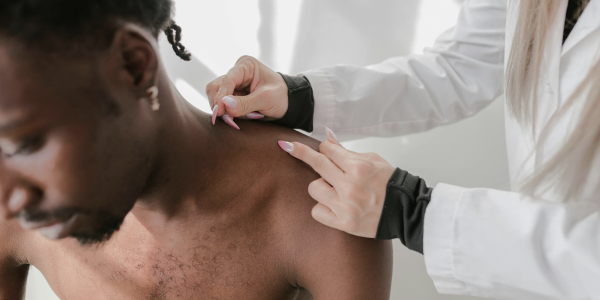
The ABCDE rule is a simple mnemonic developed by dermatologists to help you spot a suspicious mole. Once a month, ideally after a shower, give your skin a proper once-over in front of a mirror. For each mole or spot, run through these five checks:
- A – Asymmetry: Imagine drawing a line through the middle of the mole. Do the two halves match? Healthy moles are usually symmetrical, melanomas often aren’t.
- B – Border: Healthy moles have smooth, well-defined edges. Melanomas often have irregular, jagged, scalloped or blurry borders.
- C – Colour: A normal mole tends to be one even shade of brown. Melanomas can contain multiple shades, including tan, brown, black, white, red or even blue.
- D – Diameter: Most melanomas are larger than 6mm across (about the size of a pencil eraser), although they can be smaller, so don’t dismiss something just because it’s little.
- E – Evolving: Any mole that changes in size, shape, colour, or that starts to itch, bleed or crust over needs to be checked. Change is the biggest red flag.
Most of these skin changes will appear in sun-exposed areas. If your ever suspicious or want a second opinion, we encourage you to book an in-person appointment with your GP.
How to do a proper self-exam:
- Check yourself once a month in a well-lit room with a full-length mirror.
- Don’t forget the easy-to-miss spots: scalp, behind the ears, between fingers and toes, soles of the feet, under nails, and the genital area.
- Use a hand mirror (or get a partner) to check your back, buttocks and the back of your neck.
- Take photos of any moles you’re unsure about, so you can track changes over time.
Important note for people with darker skin: Skin cancer can affect any skin tone. Acral lentiginous melanoma is more common in people with Black or Asian heritage and tends to appear in places that don’t see much sun, like the palms, soles of the feet, or under the nails. It’s often diagnosed later, which makes self-checks especially important.
Who’s Most at Risk, It’s Not Just About Sun Exposure
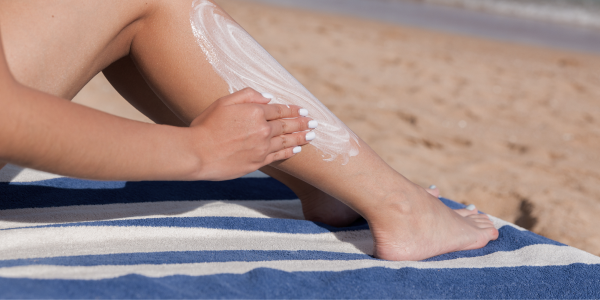
UV exposure is the single biggest risk factor for skin cancer, but it isn’t the only one. Your individual risk is shaped by a combination of things; some you can control and some you can’t.
Things you can’t change:
- Skin type. If you have fair skin that burns easily, freckles, light eyes, or red or blonde hair, you’re at higher risk. But this doesn’t mean people with darker skin are off the hook, you’re still at risk and screening is just as important.
- Number of moles. Having a lot of moles (more than 50), or several “atypical looking” moles, raises your risk of melanoma.
- Family or personal history. If a parent, sibling or close relative has had melanoma, or you’ve had skin cancer before, your risk is higher.
- Age. Risk increases as you get older, although melanoma is also one of the more common cancers in younger adults.
- A weakened immune system. People taking immunosuppressants (for example, after an organ transplant) are at higher risk.
Things you can change:
- UV exposure. Both the sun and sunbeds are the main culprits. More than 5 sunburns in your lifetime are enough to double your risk of melanoma.
- Sunbed use. The International Agency for Research on Cancer classifies UV light from sunbeds as a Group 1 carcinogen, the same category as tobacco and asbestos. There is no such thing as a safe tan from a sunbed.
- Sun protection habits. Skipping sunscreen, not reapplying, or not wearing protective clothing all add up over a lifetime.
Be Sun Smart:
If you’re planning on enjoying the sun read our other blog post on how to keep your skin safe during the summer.
- Slip on protective clothing that covers your shoulders, back and chest.
- Apply on a broad-spectrum sunscreen of at least SPF 30 with 4 or 5-star UVA protection, 20 minutes before going outside, and reapply every 2 hours (and after swimming or sweating).
- Slap on a wide-brimmed hat to shade your face, neck and ears.
- Slide on UV-blocking sunglasses to protect your eyes and the delicate skin around them.
- Shade yourself, especially between 11am and 3pm when UV levels in the UK are at their highest.
You can check the UV forecast for your area on the Met Office website, or check your local weather app for location-specific sun protection advice.
When to Book an Appointment: Signs You Shouldn’t Ignore
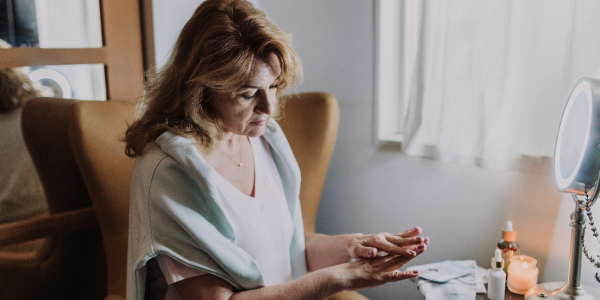
If you spot something unusual, don’t sit on it. Most suspicious spots turn out to be harmless, but the only way to know for sure is to get checked. The NHS recommends contacting your GP if you notice any of the following:
- A new mole or skin growth, particularly in adulthood
- An existing mole that has changed in size, shape or colour
- A mole that itches, bleeds, oozes, crusts or becomes painful
- A sore, ulcer or scab that hasn’t healed after 3 weeks
- A red, scaly or crusty patch of skin that won’t go away
- A lump that is firm, growing, or pearly and shiny
- Changes in the skin under your nails (such as a dark streak), on your palms or on the soles of your feet
Initially you might be asked to take a clear photo of the spot and send it through your GP’s online service so a clinician (or sometimes a specialist dermatology team) can take a look. If anything looks suspicious, you’ll be referred under the NHS 2-week wait pathway to see a dermatologist within 2 weeks. Don’t worry, this is standard process and doesn’t mean the diagnosis is cancer.
The most important thing? Don’t delay because you don’t want to “waste anyone’s time”. Early detection saves lives, and your GP would much rather check ten harmless freckles than miss one melanoma.
Treatment Options and What to Expect After Diagnosis
If your GP refers you to a dermatologist, the first thing they’ll do is examine the area closely, often using a dermatoscope (a small magnifying tool with a light). If they’re concerned, the next step is usually a biopsy.
Diagnosis: the biopsy
A biopsy means removing all or part of the suspicious area so it can be examined under a microscope. For most suspected melanomas, the entire lesion is removed (an excisional biopsy) with a small margin of healthy skin around it. The procedure is usually done under local anaesthetic, and you’ll go home the same day.
Treatment options
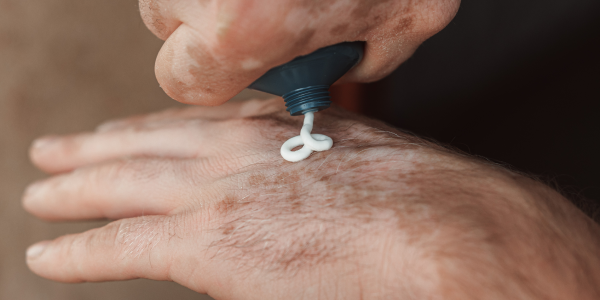
Treatment depends on the type of skin cancer, how deep it is, and whether it’s spread. Your specific plan will be agreed with you by a multidisciplinary team, but the main options include:
- Surgical excision. The first-line treatment for most skin cancers. The dermatologist removes the cancer along with a margin of healthy tissue. For early-stage melanomas and most BCCs/SCCs, this is often all that’s needed.
- Mohs micrographic surgery. A specialised technique used for skin cancers on the face or other cosmetically sensitive areas. Layers are removed and examined one at a time until no cancer cells remain, sparing as much healthy tissue as possible.
- Cryotherapy. Freezing precancerous lesions (like actinic keratoses) or some small BCCs with liquid nitrogen.
- Topical treatments. Creams such as imiquimod or 5-fluorouracil can be used for superficial BCCs and pre-cancerous patches.
- Radiotherapy. Used when surgery isn’t suitable, or sometimes after surgery to mop up any remaining cells.
- Immunotherapy and targeted therapy. For more advanced melanomas, drugs like pembrolizumab, nivolumab and BRAF inhibitors have transformed outcomes over the past decade by helping the immune system attack cancer cells or blocking the signals that drive their growth.
- Chemotherapy. Less commonly used than it once was but still has a role in some advanced cases.
What happens after treatment?
Once your skin cancer has been treated, you’ll usually have follow-up appointments to check the area is healing well and to make sure the cancer hasn’t come back. For melanoma, follow-up typically continues for several years, since recurrence is possible. You’ll also be taught how to do regular self-checks to spot any new or returning lesions early.
It’s normal to feel anxious after a skin cancer diagnosis, even for the “milder” types. Organisations like Macmillan Cancer Support and Melanoma Focus offer free guidance, patient information and peer support to help you and your family through it.
Final Thoughts: Small Habits, Big Difference
Skin Cancer Awareness Month is a chance to reset your habits. You don’t need to live in fear of the sun, getting outside is brilliant for your physical and mental health. But a bit of sunscreen, a hat, and a monthly skin check can make a genuine difference to your long-term risk.