

Rated 4.8


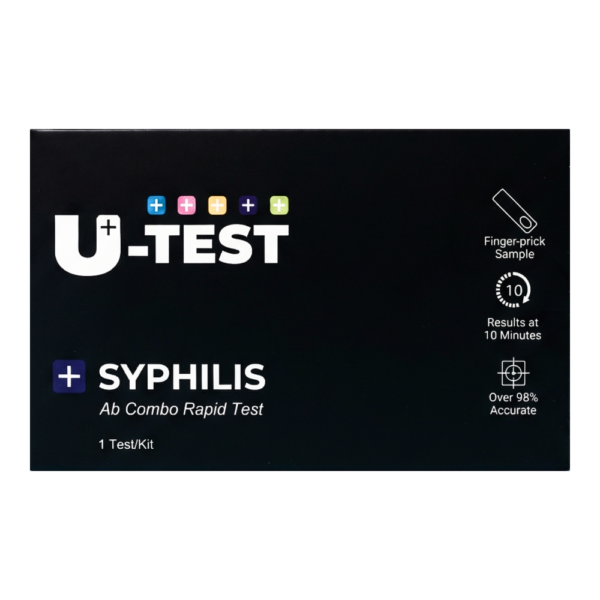
Syphilis STI Rapid Home Test Kit


Price Checker
Please select the product variation first.

About the product
U-Test Syphilis Rapid STI Home Test Kit is used to detect syphilis, a sexually transmitted infection caused by bacteria that can lead to serious health complications if left untreated
Frequently Asked Questions
Have a question? We're here to help
What are the signs and symptoms of syphilis?
Syphilis symptoms can vary depending on the stage of infection, and some people experience no noticeable symptoms. Early signs may include a small, usually painless sore around the genitals, anus or mouth. Later symptoms can include a non-itchy rash, particularly on the palms of the hands or soles of the feet, swollen glands, fatigue, headaches and patchy hair loss. If you notice possible symptoms, seek advice from a sexual health clinic, even if your syphilis home test kit gives a negative result.
How quickly can syphilis start after exposure?
The first symptoms of syphilis can appear around three weeks after exposure, although they may develop anywhere from approximately 10 days to three months later. The first sign is often a painless sore where the infection entered the body. However, some people have no noticeable symptoms. It is also important to understand that syphilis can take several weeks to become detectable on a test. A negative result shortly after exposure does not rule out infection, so follow the test instructions and seek advice about repeat testing.
What should I do if my syphilis home test is negative but I have symptoms?
If your syphilis home test is negative but you have symptoms, contact a sexual health clinic or GP for further assessment and testing. You may have tested during the window period, when an infection is not yet detectable. A healthcare professional can arrange appropriate blood tests and, if necessary, examine or swab any sores. Avoid sexual contact until you have received medical advice, as syphilis can still be transmitted if you are infected.
Do not rely on a negative home test to rule out syphilis when symptoms are present.
How accurate is an at-home syphilis test?
Home syphilis tests are a convenient way to check, and they work best when you test at the right time and follow the instructions in your kit. The test looks for antibodies, which your body makes in response to the infection, using a finger-prick blood sample.
It can take up to 12 weeks for an infection to show up on a test, so if you test sooner than that, repeat the test after 12 weeks. Your home test works alongside NHS sexual health services, which offer free tests, treatment and checks for other STIs. If your result is positive, or you have a sore or rash whatever your result, visit an NHS sexual health service for a blood test to confirm it and, if needed, start treatment.
What can throw off a syphilis test?
Home syphilis tests give the most reliable result when they’re used correctly and at the right time, and a few things can affect the result:
- Testing too early. It can take up to 12 weeks after sex with someone who may have syphilis for an infection to show up, so a negative result before then can’t rule it out.
- Not following the instructions. The kit works best when you follow the steps carefully, take the finger-prick sample as described and read the result at the time the instructions give.
- A past infection. The test looks for antibodies, which can stay in your blood even after syphilis has been treated, so a positive result doesn’t always mean a new infection.
- Another infection. Occasionally, a test picks up antibodies from a different infection and mistakes them for syphilis.
If your result is positive, or you have a sore or rash whatever your result, visit an NHS sexual health service for a blood test to confirm it and, if needed, start treatment.
What is one of the first signs of syphilis?
One of the first signs of syphilis is a small sore (ulcer), sometimes called a chancre, where the infection entered the body. It’s usually painless and you may only have one, and it can appear on or around the genitals, anus or mouth. It can take 3 weeks or more after infection to appear, and you might not notice it if it’s inside the vagina or bottom.
The sore usually heals on its own, but the infection stays in the body unless it’s treated. A test is the only way to confirm syphilis, so if you’ve had a sore like this or think you may have been exposed, get tested.
How long does it take to get syphilis test results?
You get your result at home, usually within 10 to 15 minutes of adding the buffer solution to your finger-prick blood sample. Read it at the time your instructions give, and not after 20 minutes. If no lines appear, the result is invalid, so repeat the test with a new kit.
If your result is positive, or you have a sore or rash whatever your result, visit an NHS sexual health service for a blood test to confirm it and, if needed, start treatment.
Can I test negative for syphilis but still have it?
Yes, it’s possible, especially if you test soon after sex with someone who may have syphilis. The test looks for antibodies, which can take time to appear, and it can take up to 12 weeks for an infection to show up, so a negative result before then can’t rule it out. If you test sooner than that, repeat the test after 12 weeks.
If you have a sore or rash, visit an NHS sexual health service for a test whatever your result, and avoid sex until you’ve had advice, as syphilis can still be passed on. If you’re concerned at any point, an NHS sexual health service can test you, talk it through and start treatment if you need it.
Same day dispatch:
0 minutes


Superintendent Pharmacist: Justin Dicks 2038305
© Total Access Health LTD. All rights reserved.
Pharmacy Address: 42 Barnard Road, Norwich, NR5 9JB