
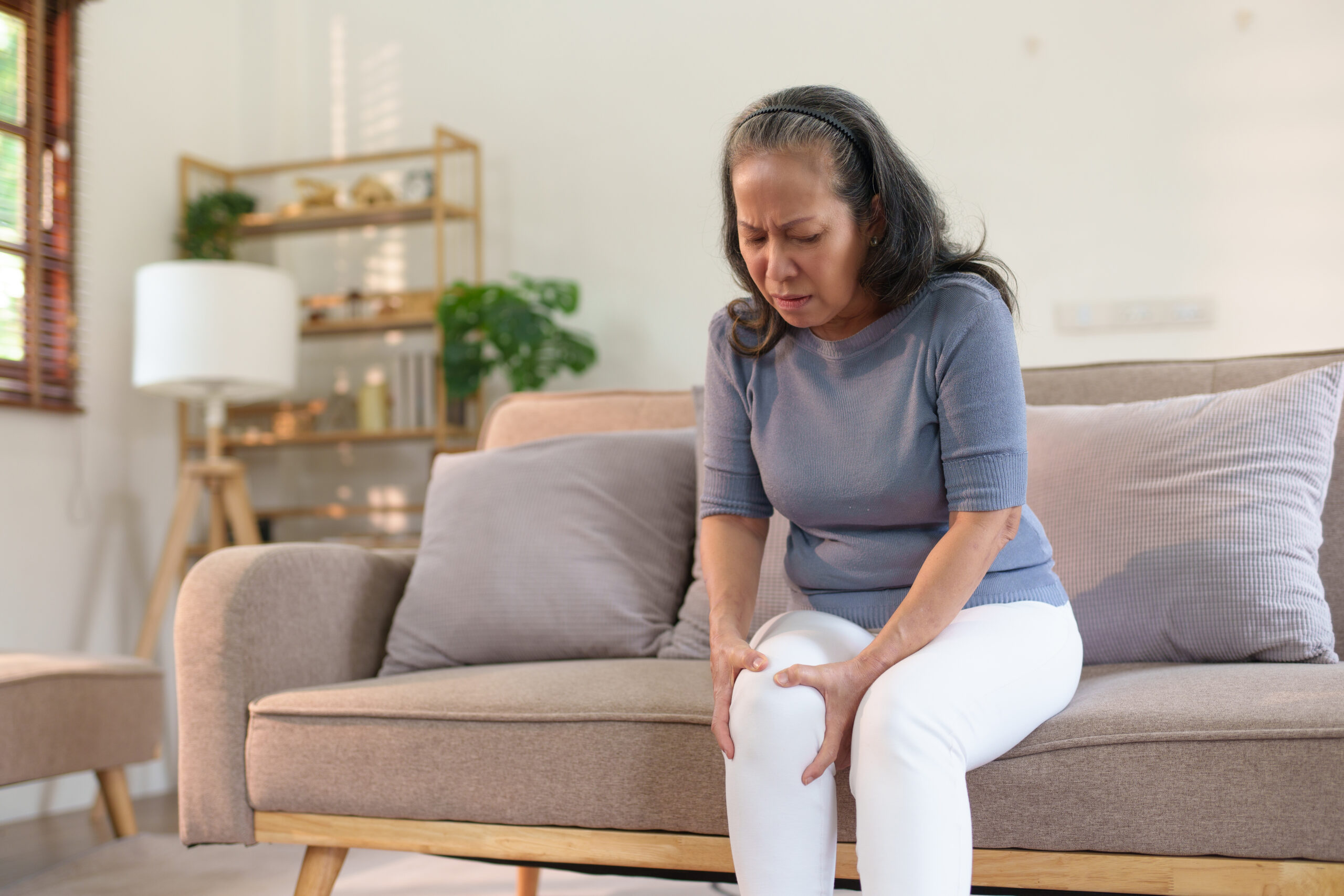
What is it?
Joint pain, stiffness, and general aches and pains in joints or muscles, often in the hands, knees, neck, or lower back, are a surprisingly common but under-talked-about menopause symptom.
Why does it happen?
Oestrogen helps protect your joints and the tissue around them. As your oestrogen levels fall, joints can get stiffer and ache more easily, and some women feel like their joints have aged faster than the rest of them.
A large study of over 93,000 women found that joint or muscle pain was reported by 40% of women before menopause, rising to 57% during perimenopause and 59% after menopause. This shows a real, measurable increase tied to the menopause transition itself, not just getting older.
Things that can help
- Regular low-impact exercise (swimming, walking, cycling) and keeping joints moving generally helps more than resting them
- Strength training, which supports your joints and can ease pain over time
- Keeping to a healthy weight, since extra weight puts more load on weight-bearing joints
- Getting enough omega-3 in your diet, though the evidence here is more limited
- Heat (warm baths, heat pads) for relief when things flare up
Can anything medical help?
HRT has some evidence for easing joint pain as part of managing your symptoms overall, though it isn’t specifically licensed as a joint pain treatment on its own. Over-the-counter pain relief can help with flare-ups, but check with a pharmacist or your clinician what’s suitable for you, especially if you’re on other medication.
When to get more help
Menopause-related joint aches are usually widespread and come and go. See a GP if you notice:
- joint swelling, redness, or heat (rather than just ache or stiffness)
- one joint hurting a lot more than the others
- stiffness in the morning that lasts more than 30–45 minutes
These can sometimes point to something like inflammatory arthritis, which needs its own separate check rather than just being put down to menopause.
The bottom line
If your joints have started aching around the same time as other menopause symptoms, you’re not imagining the connection. It’s real, well-documented, and there’s plenty you can do about it.
Not sure if your aches are menopause-related? Try our symptom checker, or book a menopause consultation to talk through your options.