

Rated 4.6


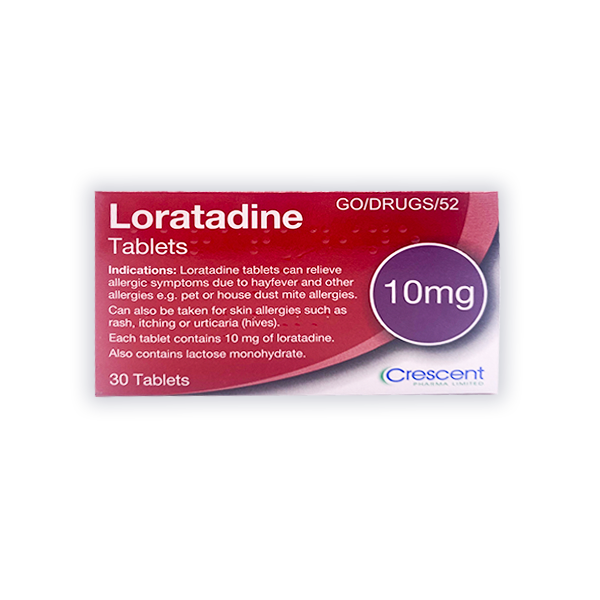
Loratadine Tablets


Price Checker
Please select the product variation first.
Related Products

About the product
Loratadine Tablets are a non-drowsy antihistamine used to relieve symptoms of allergies such as hay fever, skin rashes, and hives. They work by blocking the action of histamine, a chemical released during allergic reactions that causes itching, sneezing, runny nose, and watery eyes. Loratadine provides long-lasting relief, usually with a single daily dose, and is suitable for both seasonal and year-round allergies.
Overview
FAQ
Directions
Side Effects
How it works
Delivery
Ingredients
Warnings
Overview
Loratadine Tablets are a type of antihistamine medication commonly used to relieve symptoms of allergies, such as sneezing, runny nose, and itchy eyes. They work by blocking the action of histamine, a substance in the body that causes allergic symptoms. Loratadine is known for being non-sedating, meaning it doesn’t typically cause drowsiness. It’s effective in treating seasonal allergies like hay fever, as well as other allergic conditions.
Frequently Asked Questions
Have a question? We're here to help
When should Loratadine Tablets be taken?
Loratadine Tablets are typically taken once daily, and it’s usually best to take them at the same time each day.
If using Loratadine for seasonal allergies, it may be more effective to begin taking Loratadine for a few days before you expect to encounter allergens. For year-round allergies, continuous daily use may be recommended.
What if I take more Loratadine Tablets than I should?
Taking more Loratadine than recommended can increase the risk of side effects and potential overdose. Although no serious problems are expected, you should still talk to your doctor or pharmacist straight away as you may get a headache, have a rapid heartbeat, or feel sleepy.
How do Loratadine allergy tablets combat seasonal allergies?
Loratadine Tablets combat seasonal allergy symptoms by blocking the natural substance histamine that your body makes during an allergic reaction. This causes symptoms such as sneezing, itching, watery eyes, and a runny nose.
Loratadine inhibits the effects, reduces the symptoms, and provides relief. It’s especially effective against pollen-related allergies, commonly known as hay fever.
Can Loratadine 10mg Tablets provide quick relief from hay fever symptoms?
Loratadine 10mg is effective in quickly relieving hay fever symptoms for many individuals. It usually stars working within hours of taking, however response times can vary based on individual factors. In order to get the most effective relief, consistent daily use as prescribed in recommended.
Can Loratadine Tablets be used for treating hives and other skin conditions?
Yes! Loratadine Tablets are effective in treating hives and certain other skin allergic reactions. The medication helps by reducing itching and the size and number of hives. While it is effective for many, it’s essential to consult your doctor or pharmacist for the most appropriate treatment for your specific condition.
Can Loratadine 10mg tablets be taken for severe allergies?
Loratadine 10mg Tablets can be used for severe allergy symptoms, but its effectiveness may vary as its primary designed to treat symptoms such as sneezing, runny nose, and itching.
In cases of extremely severe allergies, your doctor or pharmacist may recommend additional or alternative treatments. It’s important to discuss the severity of your allergies with a medication professional to determine the best course of action.
Is Loratadine safe to use during pregnancy?
If you are pregnant or breast-feeding, think you may be pregnant, or are planning to have a baby, ask your doctor or pharmacist for advice before taking this medicine.
However, as a precautionary measure, it is preferable to avoid the use of Loratadine Tablets during pregnancy. You should also avoid taking this medication if you are breast-feeding as this treatment passes into the mother’s milk.
Is Loratadine considered a non-drowsy medication?
Loratadine is commonly classified as a non-drowsy antihistamine as it doesn’t pass easily through the blood-brain barrier, reducing the likelihood of causing drowsiness. However, sensitivity varies among individuals, and a small percentage may still experience some drowsiness.
How effective is Loratadine compared to Cetirizine in treating allergic reactions?
Both Loratadine and Cetirizine are effective antihistamines for treating allergic reactions such as sneezing, runny nose, and red/watery/itchy eyes. The choice between them often depends on personal response and preference. Consult your healthcare provider to determine the best option for your allergies.
Can I consume alcohol with Loratadine Tablets?
It’s generally advised to avoid alcohol while taking medications. However, Loratadine Tablets have not been shown to add to the effects of an alcoholic drink. Despite this, drinking alcohol can still impair your reactions and judgement.
Can I drive while taking Loratadine Tablets?
In clinical trials that assessed driving ability, no impairment was observed in patients taking loratadine. Loratadine Tablets are not expected to cause you to be drowsy or less alert, however, very rarely some people experience drowsiness, which may affect their ability to drive.
It’s important to check how you react to Loratadine Tablets before attempting to drive or use machinery.
How should Loratadine Tablets be stored?
There are no special storage instructions for Loratadine Tablets, but they should be kept in their original packaging. Also keep this medicine out of the sight and reach of children.
Loratadine Tablets must not be used after the expiry date which is stated on the carton and foil after ‘EXP’. This date refers to the last day of that month. It’s good practice to check this date when the medication arrives to check the expiration date.
How should I dispose of Loratadine Tablets?
Loratadine Tablets should be disposed of responsibly to ensure that they do not harm the environment or others. They should not be thrown in the trash or flushed down the toilet. Instead, take them to a local pharmacy to ensure they are disposed of safely and responsibly.
Can I buy Loratadine Tablets online?
Where can I find additional information about Loratadine?
e-Surgery has a free ‘Ask-a-Pharmacist’ service where you can talk to a trained UK pharmacist and receive professional healthcare advice. Alternatively, the BNF website has additional information available about Loratadine.
Directions
Loratadine Tablets should be taken exactly as prescribed by your doctor or pharmacist. If you are unsure, check with them.
The recommended dose in adults and children over 6 years old with a body weight greater than 30kg is one tablet daily, with a glass of water, with or without food. Meanwhile, adults and children with severe liver problems should take one tablet one time a day and every other day with a glass of water, with or without food. However, you should talk to your doctor, pharmacist, or nurse before taking this medicine.
If symptoms worsen or persist after seven days of treatment, you should see a doctor.
Side Effects
While Loratadine is generally well-tolerated, some people may experience side effects. The most reported side effects are:
- drowsiness
- headache
- increased appetite
- difficulty sleeping
If you get any side effects, including not any mentioned in the patient information leaflet, talk to your doctor or pharmacist.
How it works
Loratadine is an antihistamine that helps relieve allergy symptoms like sneezing, runny nose, itchy eyes, and hives. It works by blocking histamine, a chemical your body releases during an allergic reaction. Loratadine is a non-drowsy antihistamine, so it usually doesn’t make you feel sleepy. It’s commonly used for allergies.
Delivery
e-Surgery uses Royal Mail for delivery, with service choices of Royal Mail 48 Tracked, Royal Mail 24 Tracked, and Royal Mail Special Delivery by 1pm (discover more about e-Surgery delivery).
Your Loratadine Tablets will arrive in discreet and recyclable packaging at the delivery address of your choice.
Ingredients
The active substance is loratadine. Each tablet contains 10 mg loratadine.
The other ingredients are lactose monohydrate, maize starch, pre-gelatinised maize starch and magnesium stearate.
Warnings
You should not take Loratadine Tablets if you are allergic to loratadine or any of the other ingredients of this medicine.
Talk to your doctor, pharmacist, or nurse before taking Loratadine Tablets if:
- you have severe liver problems
you are due to have any skin tests for allergies. Do not take Loratadine Tablets for two days before having these tests. This is because it may affect the test results.
Same day dispatch:
0 minutesSame day dispatch:
0 minutesLoratadine Tablets
Same day dispatch:
0 minutesRelated Products



Superintendent Pharmacist: Justin Dicks 2038305
© Total Access Health LTD. All rights reserved.
Pharmacy Address: 42 Barnard Road, Norwich, NR5 9JB